
In today’s business-to-business sales landscape, we are experiencing a fundamental transformation in the way we organize, conduct, and enhance customer relationships. It’s not just about offering multiple points of contact, but about ensuring they all work in sync, delivering a truly fluid and consistent experience. This is at the core of every modern omnichannel strategy which, when properly implemented, can drive commercial growth, reduce costs, and significantly increase customer satisfaction. In this article, we will show you how to develop an integrated channel approach to accelerate B2B sales using technology, data analytics, and artificial intelligence, just as we do here at Nuvia.
What is omnichannel? Understanding the evolution and concept
Talking about channel integration might sound new, but ever since the emergence of the first CRMs and data centralization, the desire to sell more and serve customers better through connected tools has existed in companies. With the advancement of digital technologies and the multiplication of contact channels, the challenge isn’t just about “being everywhere”—it’s about connecting these points and building a continuous journey for customers.
Omnichannel is not about the number of channels. It’s about complete synchrony of experiences.
So, in the face of simple digital multichannel saturation, the omnichannel paradigm emerges. In omnichannel, all interaction points – phone, WhatsApp, chat, email, in-person visits, and social networks – must communicate with each other. The journey can start in one channel and continue on another with zero friction, leveraging history, preferences, and context.
To sum up:
- The customer requests a quote via website chat.
- Receives an automatic reply on WhatsApp through a trained bot.
- Schedules an in-person meeting via email sent by the CRM.
- And when it goes to sales, the entire history is integrated, with nothing lost in transition.
This continuous flow only happens when true integration exists—coordinating communication and automation with the support of technologies that bridge and “remember” the client at every interaction.
Omnichannel versus multichannel
A common question: why isn’t multichannel enough? Just look at the experience of a B2B customer who gets “stuck” moving between channels with no continuity. In a multichannel setting, the client interacts via various means, but each channel might work in isolation. For example: a commercial chat records the communication, but if the lead decides to call later, the phone rep doesn’t know the previous conversation.
Multichannel solves the problem of presence, but not the fragmentation of the journey.
In omnichannel, the conversation between channels is constant, delivering:
- A single customer view;
- Personalized actions, regardless of entry channel;
- Communication centered on data, not the channel;
- Smooth handoff between attendants, departments, or platforms with no restart needed.
This difference guarantees greater fluidity, accelerates sales, and builds stronger relationships in B2B environments.
Why is integrating physical and digital channels a B2B priority?
The corporate buyer is more demanding and connected than ever. According to a recent McKinsey survey, 80% of B2B customers consider switching suppliers if their main needs—including an integrated, seamless cross-channel experience—aren’t met. This means failures in integration and continuity are critical loss points for revenue and loyalty in complex sales.
In the B2B journey, a buyer may start by emailing, move to a call, seek support via an app, request a personalized proposal on WhatsApp, and, when closing, proceed through a self-service portal. Each interaction holds valuable data that, when connected and analyzed, reveals intentions, objections, and even cross-sell opportunities—but only when channels “talk.”
Connecting physical and digital channels is no longer a differentiator, but a prerequisite for companies that want to scale sales.
Here at Nuvia, we see a mindset shift: integrating channels reduces disruption risks, strengthens relationship-driven sales, and anticipates needs. More than selling, we’re building trust through personalized presence, wherever and whenever is most convenient for the other company.
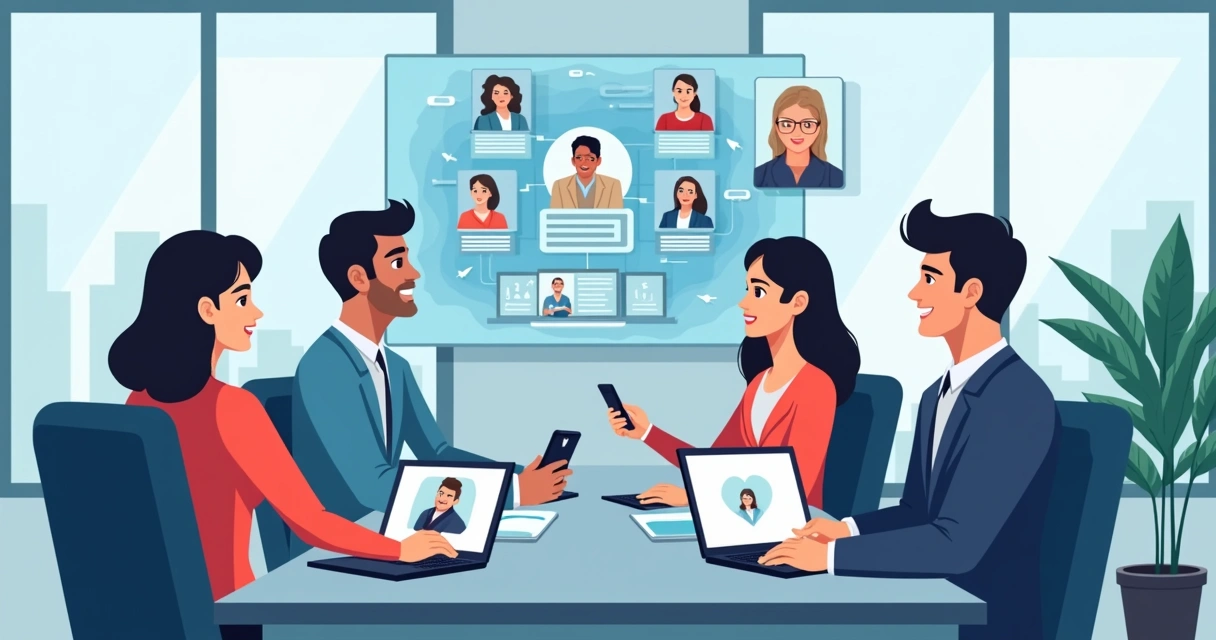 How integrated CRM and automation lead to continuous experiences
In B2B, sales are generally sophisticated, involve multiple stakeholders, long stages, and varied contexts. Without a platform to log, centralize, and automate real-time data, processes stall, leads go cold, and opportunities are lost. This is where the power of CRMs with multichannel integration and smart automation comes in.
Using these tools strategically, we can design flows like:
- Automatic capture of lead data from any channel (form, WhatsApp, phone, etc.);
- Routing of contacts to pipeline stages, based on history and profile;
- Personalized messages via email, chatbot, SMS, or automated call;
- Triggering internal tasks for pre-sales or sales with a full view of history.
The result? The client feels no rupture or repeated effort. The transition between bot, SDR, account manager, or support is seamless. Messaging is always in tune with the moment and the client’s preferred channel. Omnichannel CRM becomes a direct bridge to delight decision-makers, shortening the sales cycle and increasing conversion rates.
The role of automation in B2B personalization
At Nuvia, we use AI-based automation to achieve scale without losing the human touch. Well-trained bots gather data from conversations, recognize intent, and route relevant information—whether to educate the lead, present offers, or schedule personalized meetings for the sales team.
Automation is never robotic when combined with data intelligence.
We monitor, for example, if a lead downloads material from our website, engages with an email, or schedules a call. This tracking lets us tailor communication, creating almost bespoke experiences within regular automated flows. That reinforces a sense of closeness—crucial in B2B. This way, our commercial team focuses on negotiation and strategy, while repetitive tasks are automated with maximum efficiency.
This topic is also discussed in more detail in our article on integrating inbound and outbound with AI.
How data analytics drive decisions, predictability, and conversion
Collecting data across multiple channels is only the start. Value comes from turning it into intelligence, connection, and precise actions. Today, predictive analytics let us anticipate behavior, fix bottlenecks, and optimize campaigns in real-time. The secret is properly using dashboards integrated with the customer journey.
In B2B, we can monitor relationships that indicate cross-sell opportunities, churn, or changes in funnel behavior. For example: if leads who often interact via chat convert faster when they get WhatsApp follow-up, this insight can guide new automation rules and increase conversion rates.
Some of the metrics we track in omnichannel campaigns:
- Response time on each channel;
- Lead loss rate when switching channels;
- Percentage of deals started in digital channels and closed physically;
- Volume of interactions by pipeline stage;
- Effective personalization in automated dispatches.
With this data, we forecast demand and adjust resources, prioritizing high-potential contacts and reducing waste.
Predictability not only shortens the sales cycle but ensures no opportunity is lost along the way.
AI and data analytics working together
At Nuvia, we use machine learning algorithms to spot invisible patterns in daily operations. This allows us not only to predict which channel is most effective for a given segment, but also to reclassify leads in real-time, moving them within the funnel according to behavior, without manual intervention.
Data analysis is the silent radar of high-performance sales teams.
This intelligence also directly affects managers’ dashboards, boosting the visibility of the entire process and supporting fact-based strategic decisions.
Implementing the omnichannel strategy in the B2B scenario
Transitioning to an omnichannel approach takes planning, discipline, and technology support. It’s not just about “acquiring” systems, but about redesigning processes and tuning teams into a new standard of sales and relationship.
Here’s a practical implementation roadmap, based on our experience at Nuvia:
- Journey mapping:Identify all customer touchpoints, their preferred channels, and transition pain points. Mapping these integrations is the only way to fix hidden failures.
- Centralize data on smart platforms:Choose systems with open APIs, integrated CRM, chatbots, phone, WhatsApp, email, and self-service platforms.
- Configure automation flows:Create rules to capture new leads, nurture contacts, and trigger offers according to funnel stage and behavior in each channel.
- Train conversational AI:Teach bots and AI agents to recognize context, handle FAQs, qualify leads, and hand off to a human with full context when needed.
- Continuous feedback and improvement:Constantly analyze journey data, adjust flows, and respond rapidly to detected failures—because omnichannel is ongoing evolution.
In this process, integration with pre-existing systems is often overlooked. That’s why we place huge value on integrating AI agents with CRMs and customized funnels, ensuring minimum disruption to teams and maximum commercial performance.
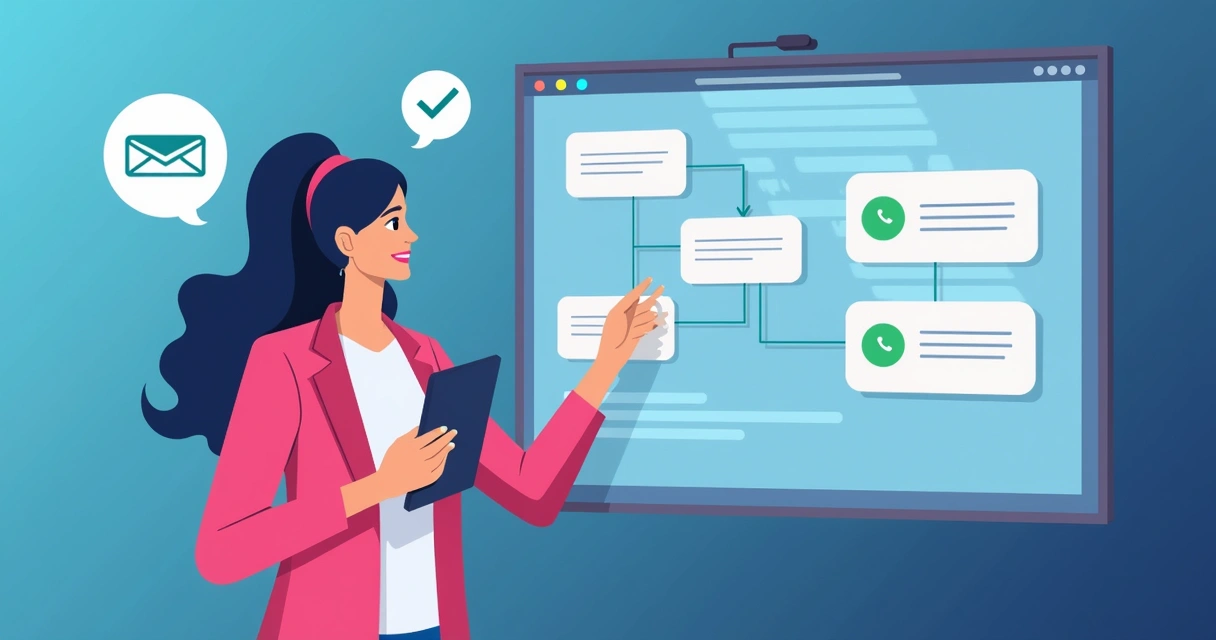 The role of self-service and AI personalization
Digital self-service is no longer just a trend but a reality in complex, recurring B2B processes. Companies need quick, accurate answers about orders, contracts, or issues—without depending on a rep’s schedule.
With generative AI, we create hubs that can:
- Answer FAQs based on the contractor’s history;
- Suggest custom content or offers from collected data;
- Route qualified contacts to the sales team only when human attention is needed, saving time and resources.
This automated personalization is possible thanks to refined data collection and analysis, integrating the entire client history, as discussed in our article about 24/7 AI support in B2B processes.
Integration with existing sales funnels: less disruption, more results
A legitimate concern is how to implement omnichannel strategies without having to overhaul the entire sales process. Our experience at Nuvia shows that integrating improvements with minimal disruption to existing funnels is the best strategy.
To do that, we look for technologies and flows that are compatible with current CRMs, importing histories, connecting APIs, and training bots in the relevant contexts. This way, sellers keep working in their familiar flows, while AI and automation provide data and continuous recommendations.
Transforming the customer experience can start by leveraging your current funnel’s full potential—there’s no need to throw away what already works.
Among the most valuable integrations, we highlight:
- Real-time “hot/cold” lead alerts;
- Personalized campaigns based on funnel stage;
- Smart escalation to specialists for out-of-the-ordinary demand;
- Visual funnels to monitor interactions and bottlenecks;
- Digital agents trained to supply precise info at various stages.
This approach, combined with predictive analytics, creates an extra layer of intelligence over sales, as shown in our special content on AI agents that connect marketing, pre-sales, and sales.
Personalized multichannel campaigns: moving from theory to action
One of the most practical ways to realize omnichannel benefits is through truly customized multichannel campaigns. It’s not about repeating the same message everywhere, but about adapting content, offer, and timing according to the channel, profile, and history of each contact.
At Nuvia, we create campaigns where, for example:
- The lead is impacted by technical content on LinkedIn, giving insights to their industry;
- Then receives a personalized email offer reinforcing the benefit tailored to their ICP;
- Upon engagement, is routed to WhatsApp, where an AI agent schedules a meeting;
- After the service, is invited to access a self-service portal to track SLA and support.
Each stage uses behavioral and previous interaction data, increasing response and engagement rates.
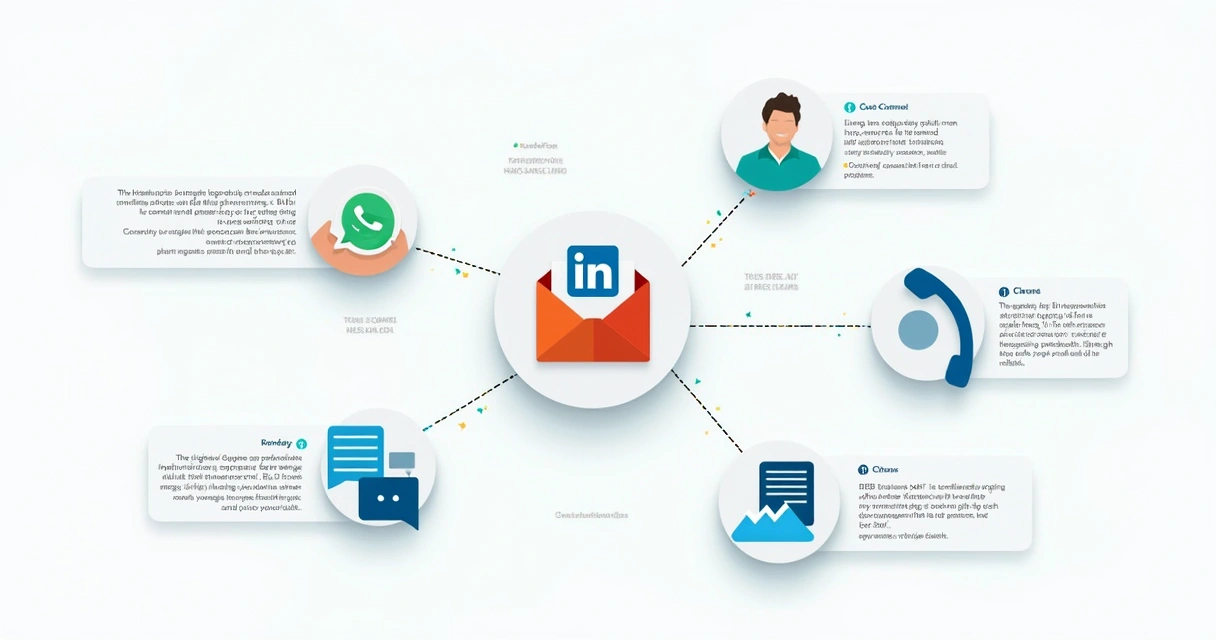 This approach requires creativity and technology. It’s not enough to just “broadcast” messages—it’s critical to segment, personalize, and measure results. The potential: more engagement, higher quality leads, increased retention, and consistent sales in the medium and long term.
Benefits of omnichannel strategy for B2B companies
Adopting a connected multi-channel approach impacts not only sales, but every customer touchpoint. Here are some practical benefits observed by companies that chose to integrate their relationship environments:
- Agility: Automated processes make service faster, reducing average response time and accelerating closings;
- Cost reduction: Leaner teams handle higher lead and sales volumes through automation and AI;
- Predictability: Data analytics feed smart dashboards, enabling quick adjustments and accurate planning of demand and resources;
- Greater satisfaction: B2B customers feel understood and recognized and get personalized service—even in automated flows;
- Fewer missed opportunities: Leads don’t get lost, as centralized systems reduce ruptures and re-engage those who switch channels or go cold in the journey.
The best examples are seen in clients who, after adopting omnichannel strategies, doubled their conversion rates and improved retention indicators. As the McKinsey survey found, most customers no longer accept fragmented experiences and will always prefer suppliers that deliver a continuous, easy, transparent, and personalized journey.
Real, practical examples for companies accelerating growth with technology
Let’s share some real-life scenarios showing how new technologies, integrations, and automations are boosting B2B companies seeking differentiation and accelerated growth.
1. B2B distributor with physical and digital sales
An industrial supply distributor set up a flow where leads captured on the website were automatically assessed by AI, classified, and serviced 24/7 by either chatbot or human, depending on urgency and profile. The same lead could request support by phone, WhatsApp, or in person—with all history, preferences, recent purchases, and tickets instantly recorded in the CRM.
The result was a 37% reduction in total sales cycle time and a significant increase in repeat purchases by active clients, thanks to a single view of service, regardless of channel.
2. Tech company integrating support and sales
A B2B software firm faced bottlenecks handing off from technical support to sales. With omnichannel integration, every automatic service request generated a centralized history, so sales reps could see tickets, proposals, resolved issues, and even upsell suggestions based on the client’s prior usage.
Result: the average ticket size increased by 21%, thanks to the cross approach, along with a revamped sales funnel to encourage faster cross-selling.
3. Consulting firm connecting inbound, outbound, and automation
By adopting Nuvia’s solutions, an HR consultancy streamlined the transition between inbound marketing, pre-sales, and sales pipeline. Integrated chatbots, CRM, WhatsApp, email marketing, and a visual funnel. AI-driven automation triggered internal tasks, automatically qualified leads, and escalated only mature opportunities to the consulting team.
The whole operation became more predictable and scalable, with real-time metrics tracking and personalized campaigns based on each lead’s profile.
 These examples show that when omnichannel strategy is engineered from the journey’s planning stage, made powerful with AI and data monitoring, it creates robust and adaptable commercial structures.
The future of B2B sales is omnichannel – starting now
No doubt remains: channel integration, enhanced by automation and smart data use, is now the most reliable way to accelerate sales and win client loyalty in the B2B market. The secret is in smooth transitions, end-to-end personalization, and abandoning the “fragmented chain” of experiences.
As we’ve highlighted, omnichannel is no longer just a trend but a requirement for company growth, sustainability, and innovation. Organizations willing to interconnect physical and digital—blending human support, AI, and automated communication—gain not only faster sales but lasting relationships.
The time to act is now. If you want to accelerate commercial growth, reduce disruptions, and win clients with more connected, intelligent experiences, our team at Nuvia can help chart that path. Our technology, consulting, and smart agents are ready to turn data into opportunities—increasing conversion and satisfaction through your whole B2B chain.
Turn data into sales and experience into loyalty. Contact us and start changing today.
Conclusion
By integrating channels, analyzing data, personalizing approaches, and leveraging technology, B2B companies don’t just accelerate business—they lay the groundwork for long-term relationships. Ultimately, the omnichannel journey shapes a culture of truly putting the client at the center—crucial for standing out in increasingly competitive markets.
If you want to learn best practices or explore how artificial intelligence can boost your sales, we invite you to discover Nuvia’s solutions. Our mission is to help companies achieve bigger results with less operational effort, using easy technology tailored for the Brazilian B2B market reality.
Frequently Asked Questions about Omnichannel in B2B Sales
What is an Omnichannel Strategy?
An omnichannel strategy involves integrating all contact channels—digital and physical—to offer the client a unified, continuous, and personalized experience throughout the buying journey. This means communication or negotiation can move across different platforms without losing history or context. In B2B, where interactions tend to be long and involve multiple people, this approach smooths the relationship, reduces friction, and increases recurring sales.
How to integrate channels for B2B sales?
The path to channel integration in B2B sales starts with mapping the complete customer journey, then selecting CRM and automation platforms that connect all interaction points. It’s crucial that these tools can exchange data with open APIs and that there are clear rules for recording and sharing information between channels like chat, phone, email, WhatsApp, and self-service systems. Training teams and keeping these integrations updated is essential to maintain a living and effective omnichannel experience.
What are the benefits of Omnichannel in B2B?
Main benefits include higher conversion rates, shorter sales cycles, fewer lost opportunities from channel breaks, faster and more personalized service, and improved client satisfaction and loyalty. Companies using an omnichannel approach typically achieve greater commercial predictability and can scale operations without proportionally increasing costs.
Does omnichannel really increase sales?
Yes, consistent omnichannel application clearly boosts sales by eliminating journey blind spots, increasing lead engagement, and reducing response times. Industry surveys show that B2B firms with a structured omnichannel experience have higher client retention, better conversion rates, and lower churn than those in fragmented multichannel environments.
How do I implement Omnichannel in my company?
Start by mapping your clients’ journeys and every interaction point. Next, choose technological platforms (CRM, automation, AI agents) capable of integrating digital and physical channels. Training teams to use these solutions and continuous data analysis guarantee proactive adjustments and ongoing customer experience improvements. Relying on expert consulting speeds up the process and avoids common pitfalls. For details, see our content on how to implement AI in sales operations.